Shuffle Along: a pivotal moment in American Musical theater!
Shuffle Along, a Broadway production from 1921 that broke down racial barriers and redefined what was possible of musical storytelling, was a turning point in American theater. With its all-Black cast and jazz-infused songs by Noble Sissle and Eubie Blake, the show not only achieved unheard-of financial results but also transformed the way musicals blended dance, rhythm, and story. The more integrated and dramatic productions that defined the Golden Age of Musicals in the 1940s and 1950s were made possible by its influence, which continued well beyond its original run. This essay argues that by offering stylistic, vocal, and lyrical innovations that altered the course of American musical theater, Shuffle Along acted as a major inspiration for the Golden Age.
Although Shuffle Along has often been overlooked by scholars, its impact on audiences at the time was remarkable . As noted in Remembering a Milestone in Entertainment History, “While forgotten by many, Shuffle Along inspired a new interest in Black musicals and was a breakthrough for African American theater, proving that audiences – both Black and white – would pay to see African American talent on Broadway.” What truly captured audiences was the show’s unique musical vocabulary—its syncopated rhythms, and energetic choreography, all of which stood apart from the operetta-style productions dominating Broadway. These innovations marked a turning point, demonstrating that new sounds and storytelling methods could succeed on a major stage, supporting the idea that Shuffle Along helped pave the way for the narratively driven musicals of the Golden Age.
According to playwright and scholar James V. Hatch, without the contributions of shuffle along, the “American musical might still be waltzing with an umpah-pah-pah to the descendants of Merry Widow and Naughty Marietta”. And according to Caseen Gaines the author of the article,Shuffle Along: The Musical That Sparked a Black Renaissance, “Its score was a clever amalgamation of jazz and ragtime, built upon a foundation of the traditional European operetta fare that was expected, and until Shuffle Along’s debut, was the most popular style of music on the Broadway stage.” Jazz was new for almost everybody, so when a musical came and people heard about this all-African American cast that plays this new yet unique music style and how good they are at acting, it was hard for people to not want to watch this show. (here is one of the songs played live https://www.youtube.com/watch?v=SmsTrhxQTGI)
As David S. Thompson argues in Shuffling Roles: Alterations and Audiences in Shuffle Along, the show’s impact came not only from its music (as mentioned earlier) but from the way it transformed performance itself. Thompson explains that the production modified traditional theatrical roles, giving Black performers new forms of expression through improvisation-infused dance, flexible vocal delivery, and comic flatness that depended on audience interaction. These innovations pushed Shuffle Along beyond the rigid structures of early-20th-century musical theater and proved that dynamic pacing and character-driven musical numbers could exist on a Broadway stage. Carol Oja agrees with what Thompson mentions in his article, they both agree that the new style of music was a very important factor but other aspects were also important. In his article “Shuffling along: Music, segregation and African American newspaper”, Oja says ”Yet it emerged within a segregated sphere–the black musical–and for a circumscribed reason: its incubation of black talent, including such nascent luminaries as Josephine Baker and Paul Robeson.” For a show to innovate new ways to approach a musical, skilled and experienced actors/actresses should be present, and here comes the role of Fredi Washington, Paul Robeson, Adelaide Hall, and Josephine Baker.
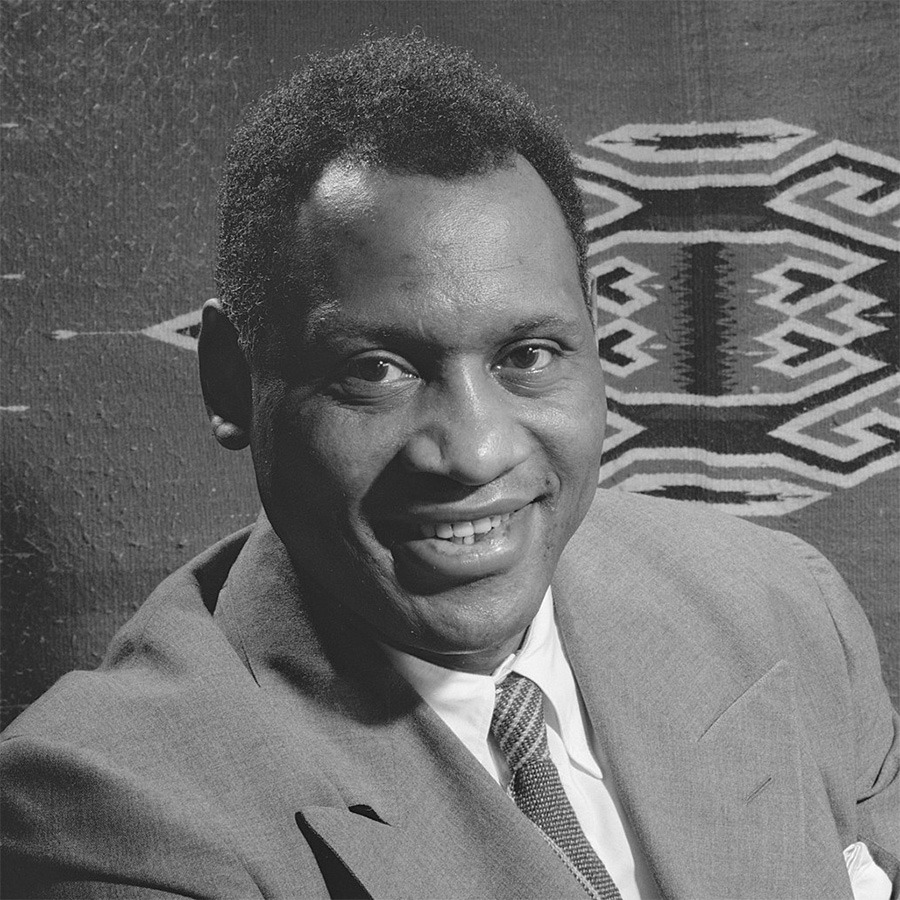
As mentioned in the article, Remembering a Milestone in Entertainment History
“The groundbreaking musical was unique in the wide array of talent it brought to the production, including choral conductor Hall Johnson and composer William Grant Still, who played oboe in the orchestra. The show gave several stage legends their first big breaks, including Paul Robeson, Adelaide Hall, Florence Mills and a 16-year-old Josephine Baker, who emerged as an instant star.” The show pumped new dancers, singers , and actors to the mainstream media, who eventually played a pivotal role in future musicals. Take for example Paul Robeson, who “In 1921, Robeson joined the chorus of the landmark musical Shuffle Along. Three years later, he braved death threats to star in Eugene O’ Neill’s All God’s Chillun Got Wings, which featured an interracial romance. Later that same year, Robeson played the lead role of O’Neill’s The Emperor Jones (1924) in the London production of the play; he would also star in the 1933 film version.” (The Kennedy Center). This demonstrates that Shuffle Along didn’t just change the 1920s, but also other musicals that came after it, and even musicals to this day. It sparked new interest in black talent, which helped in diversifying musicals, which made them being more “relatable” to a bigger audience.
And to summarize everything, as Caseen Gaines writes “If you are a lover of theater and feel like Hamilton or Rent were revolutionary, [or] West Side Story, this is like the godfather of all of those productions.” Shuffle along was and will be known as s turning point in the broadway musical history.
Citations:
Remembering a Milestone in Entertainment History, National Museum of African American history and culture, https://nmaahc.si.edu/explore/stories/remembering-milestone-entertainment-history
Tanner, Jo. ”Shuffle Along: The Musical at the Center of the Harlem Renaissance”, The Kenndy center,1992.https://www.kennedy-center.org/education/resources-for-educators/classroom-resources/media-and-interactives/interactives/drop-me-off-in-harlem/theme-and-variations/shuffle-along/
Gaines,Caseen.”Shuffle Along: The Musical That Sparked a Black Renaissance”, Lincoln center,September18,2023.https://www.lincolncenter.org/feature/legacies-of-san-juan-hill/lessemgreatershuffle-alonglessemgreater-the-musical-that-sparked-a-black-renaissance
Thompson, David. “Shuffling Roles: Alterations and Audiences in Shuffle Along”, The University of Alabama Press, 2012. https://muse.jhu.edu/article/488303/pdf
Oja, Carol. “Shuffling along: Music, segregation and African American newspapers Syndication Limited,NISyndicationLimited,Mar.20,2020.https://go.gale.com/ps/i.do?id=GALE%7CA632692959&sid=googleScholar&v=2.1&it=r&linkaccess=abs&issn=0307661X&p=AONE&sw=w&userGroupName=nysl_oweb&isGeoAuthType=true&aty=geo
Lunden, Jeff. “Shuffle Along’ Changed Musical Theater 100 Years Ago”, NPR, May 23, 2021.https://www.npr.org/2021/05/23/998962830/shuffle-along-changed-musical-theater-100-years-ago
“Paul Robeson”, The Kennedy Center. https://www.kennedy-center.org/education/resources-for-educators/classroom-resources/media-and-interactives/artists/robeson-paul/#:~:text=In%201921%2C%20Robeson%20joined%20the,which%20featured%20an%20interracial%20romance.

